Wedding planning in Mid Wales
A relaxed wedding photography timeline for a Mid Wales wedding
A good timeline does not turn your wedding into a production schedule. It quietly protects the important moments, allows for rural journeys and changing weather, and leaves you free to spend the day with the people you invited.
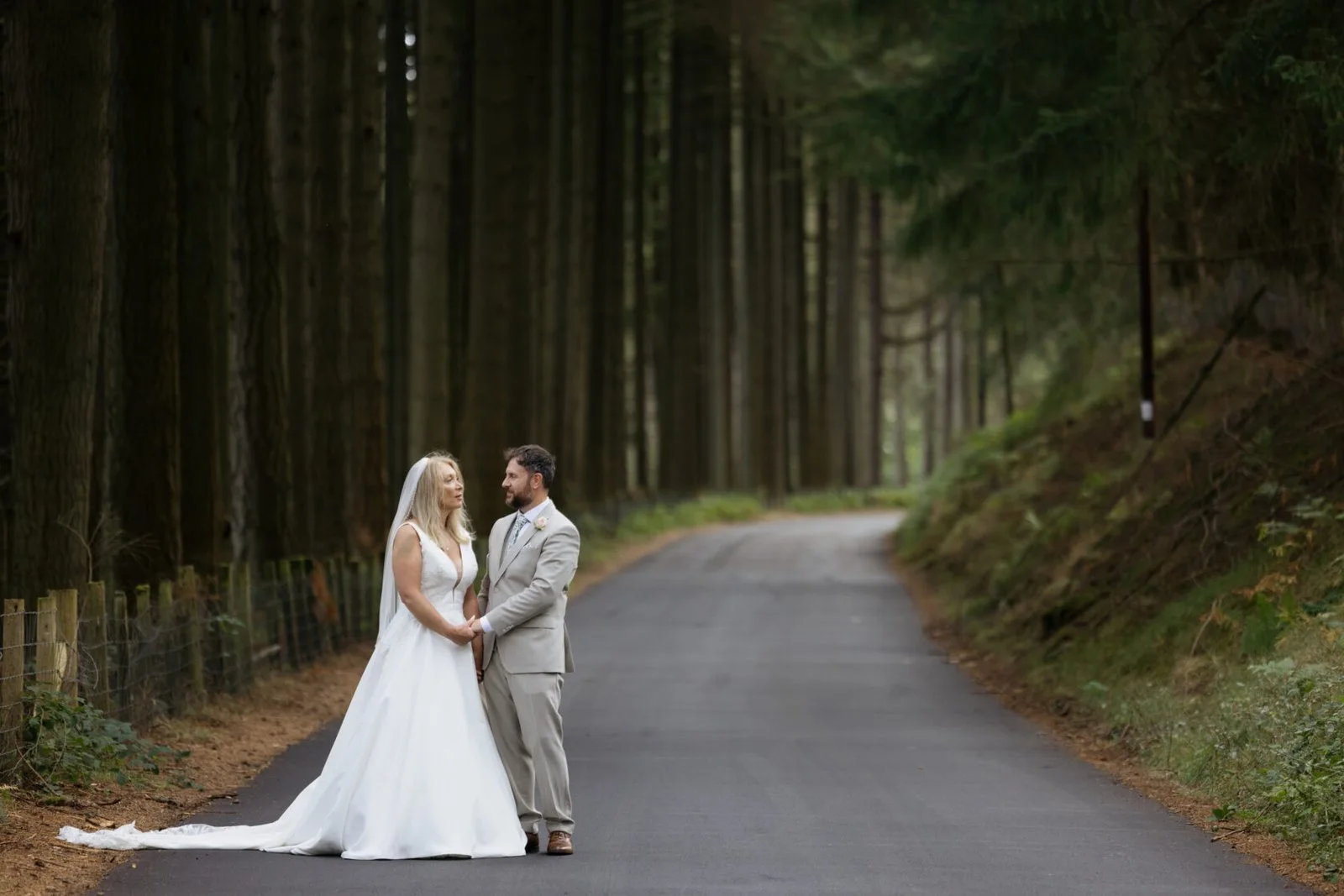
Couples often ask how much time wedding photographs really need. The honest answer is not “as long as possible”. It is enough time to work calmly, without making photography the main event.
In Mid Wales, that answer also depends on things a generic schedule can miss: a church and reception separated by several miles, narrow roads that take longer than the map suggests, a mountain shower passing through, or winter light disappearing behind a hill well before sunset. A useful timeline makes room for real life.
Start with the fixed parts of the day
Write down the times that cannot easily move: the ceremony, when food is served, speeches if the caterer needs a firm time, and journeys between locations. Then add photography around those anchors.
A barn wedding with everything in one place needs a different rhythm from preparations at home, a village church and a reception deeper in the countryside. Your timeline should describe your wedding, not somebody else’s.
What time should the photographer arrive?
For preparation photographs, arriving around 90 minutes to two hours before leaving for the ceremony usually gives the morning room to breathe. It allows me to photograph the atmosphere, people helping, nervous laughter, final details and the moment everything begins to feel real.
If two people are getting ready in different places, distance matters. Sometimes both preparations can be covered naturally; sometimes a second photographer or a clear priority is the more honest solution. Rushing between distant locations can mean neither story is photographed properly.
Build in time before the ceremony
The final half-hour of preparations often moves differently. Clothes need fastening, flowers arrive and somebody looks for a missing buttonhole. Aim to be dressed with a little margin rather than planning the final detail for the moment you must leave.
I also need to reach the ceremony before you do. For a rural church or venue, allow for parking, walking with equipment and roads that are slower than expected. Ten miles through Mid Wales does not always mean a ten-minute journey.
Do not rush the congratulations
The first minutes after a ceremony are full of hugs, surprised faces and people trying to reach you. Those photographs matter. If every guest is immediately directed into a group photograph, one of the most emotionally generous parts of the day can disappear.
When the venue and weather allow, a comfortable order is:
- leave the ceremony and take a breath;
- photograph confetti while everybody is together;
- give you time to greet guests and pick up a drink;
- gather a short list of family groups;
- take a brief walk for couple portraits.
The order can change. Rain may make a dry ten-minute window the right moment for portraits. An elderly relative may need their photograph first. A good plan is structured enough to help and loose enough to respond.
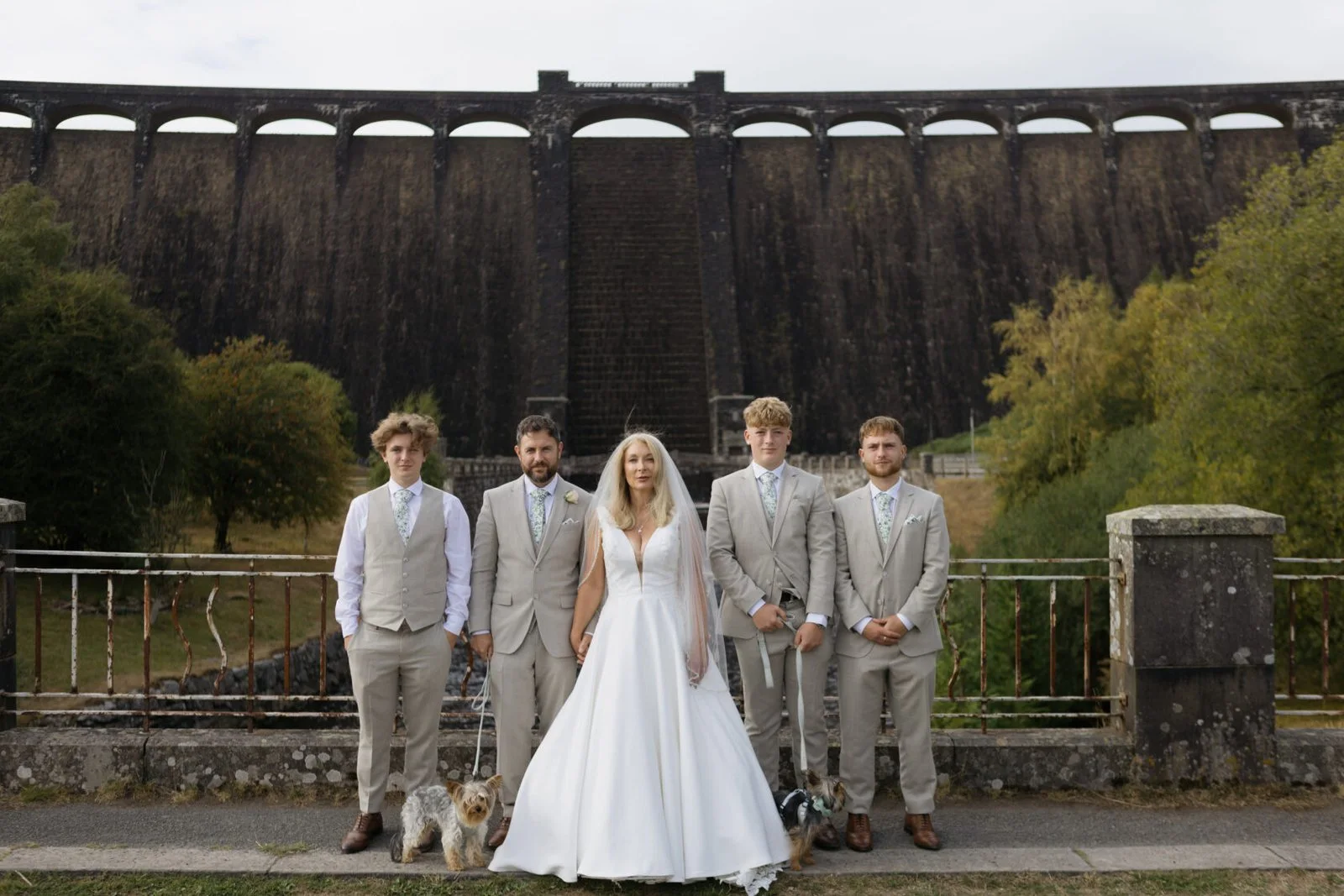
How long do family group photographs take?
A concise list of around six to eight groups can often be photographed in roughly 20 to 30 minutes when everybody is nearby. The photography is rarely the slow part; finding somebody who has gone to check into a room or order a drink is what takes time.
Choose one helpful person from each side of the family who knows the guests. Keep the list to combinations you genuinely want to keep. Several small variations of the same group can quietly consume the drinks reception.
Group photographs are valuable. They do not become more meaningful simply because there are more of them.
How long should couple portraits take?
You do not need to disappear for an hour. Fifteen to twenty minutes is often enough to make varied, relaxed portraits near the venue. If the light becomes beautiful later, we can step outside for another five or ten minutes.
Splitting portraits into two short periods can feel easier than one long session. A famous viewpoint is not automatically the best choice: if reaching it means a long drive, difficult ground or leaving just as the celebration comes alive, a quieter nearby place may feel far more connected to the day.
Plan rural travel honestly
If the ceremony and reception are in different places, use the realistic journey time rather than the fastest estimate. Add margin for guests leaving a busy car park, tractors, single-track lanes, finding an unfamiliar entrance and walking from the parking area.
It can help for the couple to leave near the front of the convoy. That creates a few calm minutes on arrival and avoids starting formal photographs while half the family is still on the road.
What if it rains?
Do not create two completely separate weddings called Plan A and Plan B. Identify flexible options: a covered entrance, a room with good window light, space for essential family groups and an outdoor location that can be reached quickly between showers.
Welsh weather often changes rather than remaining one thing all day. A wet morning can become a bright afternoon; a dramatic sky may last only minutes. Breathing room lets us use those moments without interrupting dinner or speeches. Bring footwear that can cope with the ground if countryside portraits matter to you.
Winter weddings need a different timeline
In winter, do not leave every outdoor photograph until after the wedding breakfast. Valleys, woodland and hills can lose useful light earlier than the published sunset suggests. If portraits and family photographs matter outdoors, it is usually sensible to complete them soon after the ceremony.
This does not make winter photography inferior. Low light, warm interiors and early evening atmosphere can be beautiful. It simply rewards planning around the light that actually reaches your venue.
Speeches, evening light and the first dance
Speeches before dinner can give the evening a looser rhythm; speeches after dinner may place them closer to sunset in summer. Neither is wrong. Tell your photographer and venue what matters so that a short opportunity outside does not clash with food being served.
If evening portraits are wanted, treat them as an optional pause rather than a second formal photoshoot. The best moment may be warm sunset light, mist after rain or simply a quiet breath before the first dance.
An example of a relaxed full-day timeline
This example assumes preparations and the celebration are reasonably close, with a 1.30pm ceremony. It is a starting point, not a rule.
- 10.30am: photography begins during preparations;
- 12.30pm: final preparations and calm portraits;
- 12.50pm: photographer leaves for the ceremony;
- 1.30pm: ceremony;
- 2.15pm: confetti, congratulations and drinks;
- 2.45pm: essential family groups;
- 3.15pm: 15 to 20 minutes of couple portraits;
- 3.45pm: relaxed reception coverage;
- 4.30pm: wedding breakfast;
- 6.30pm: speeches, depending on your plans;
- evening: a short light or weather-dependent portrait opportunity;
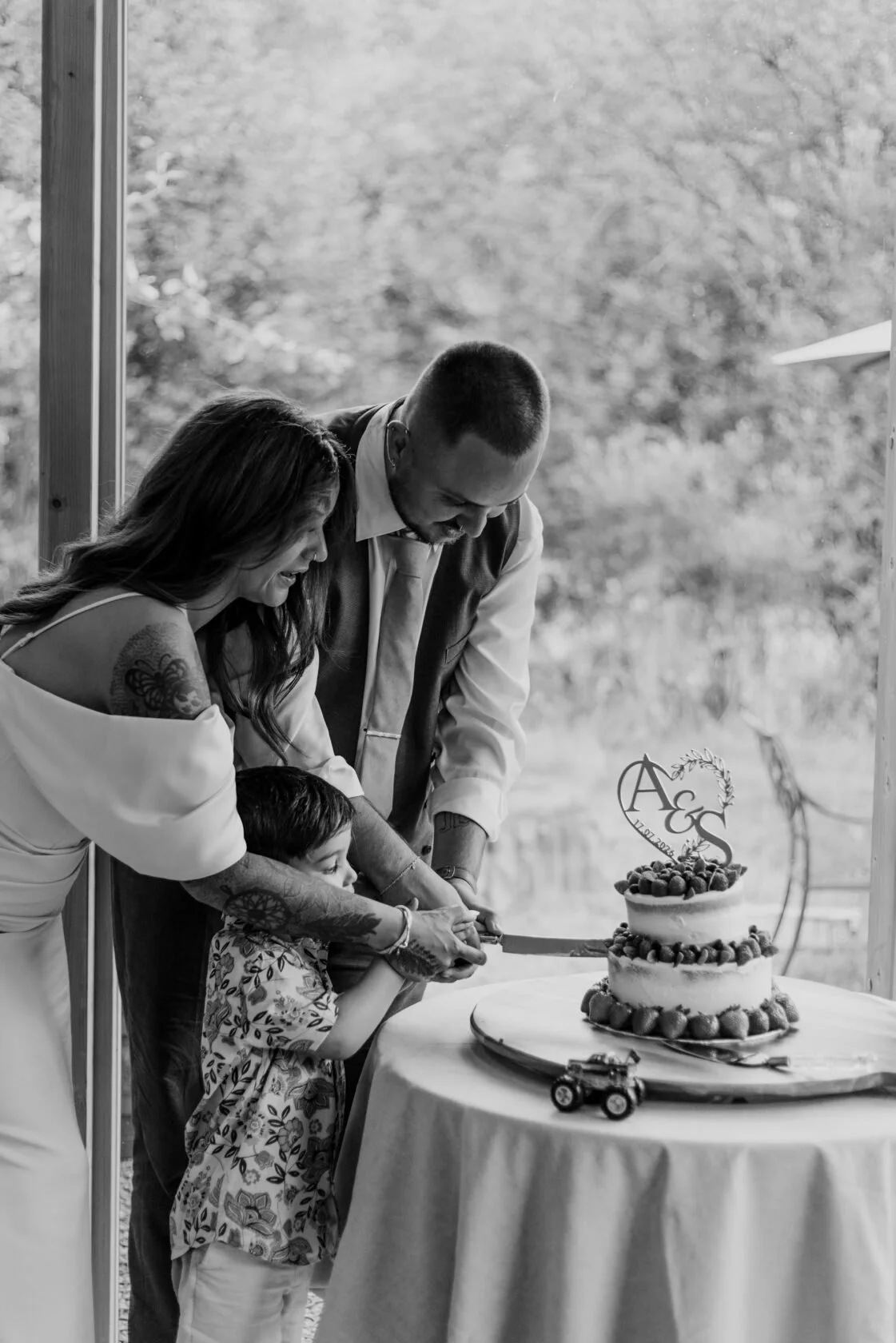
- 8.30pm: cake, first dance and the beginning of the party.
A winter ceremony may need to begin earlier. A church-to-venue journey may require more space. A small wedding might need less formal time. The right schedule reflects your people, locations and priorities.
What should we tell our photographer?
Share every postcode, access detail and fixed time. Mention mobility needs, family circumstances requiring sensitivity, surprises, traditions and the people who matter deeply to you. You do not need to write a checklist of every standard wedding moment.
The most useful question is not “How do we fit in more photographs?” It is “How do we make enough space for the moments we want to experience?” When the day has room to breathe, the photographs usually do too.