Calm wedding planning
How many family group photographs should you have at a wedding?
Family photographs preserve the relationships at the heart of a wedding. For many celebrations, six to eight carefully chosen groups provide a meaningful record while leaving plenty of time to enjoy the drinks reception.
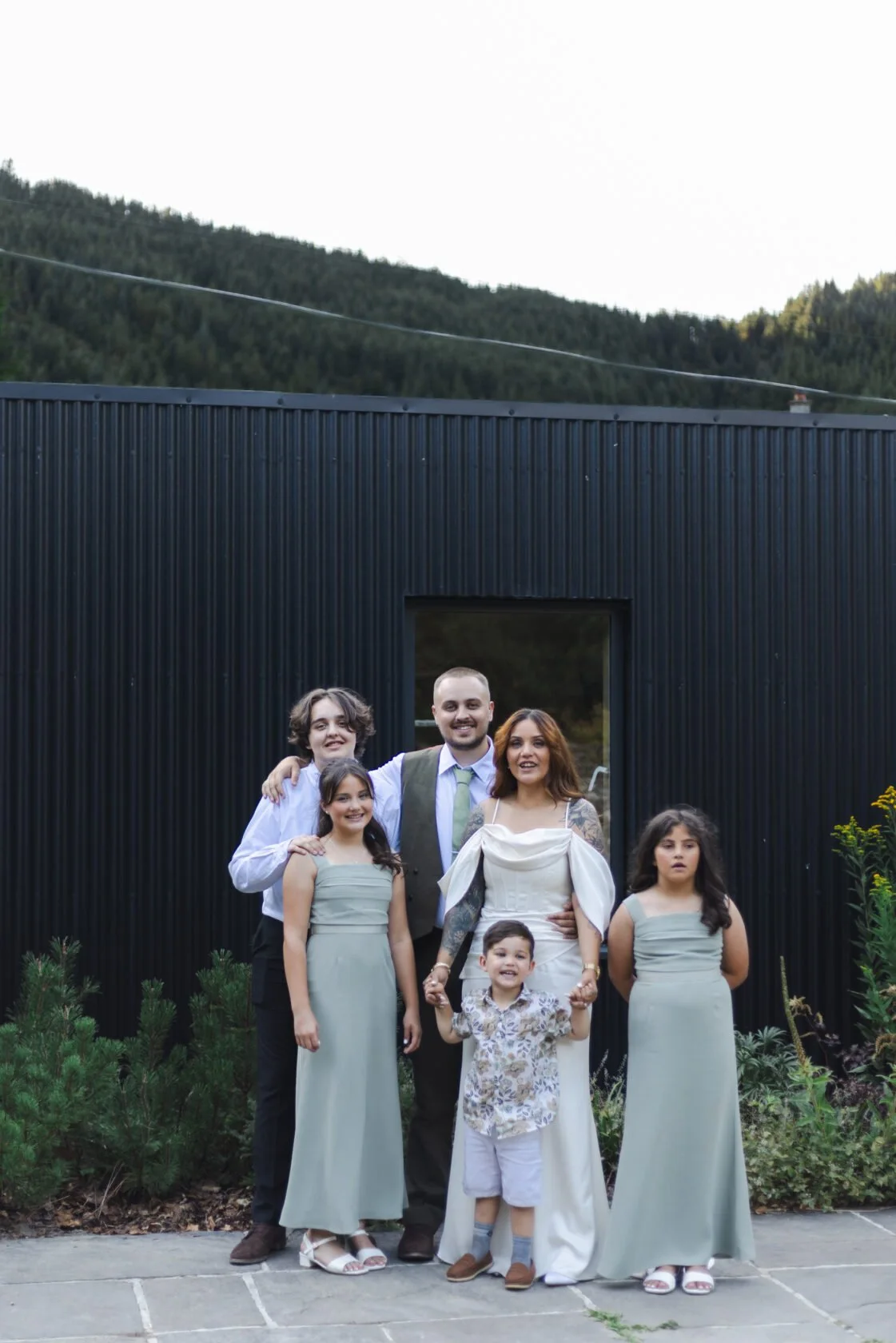
Family group photographs have a strange reputation. Couples who want a relaxed, documentary wedding sometimes worry that formal photographs will make the day feel stiff. Others wonder whether a short list might leave somebody important out of the finished gallery.
A thoughtful list resolves both concerns. It can produce photographs that grow more valuable with time while preserving space for the unscripted hugs, conversations and laughter happening around them.
Is there a correct number of group photographs?
No single number works for every family. Six to eight groups is a useful starting point because it usually covers immediate family, grandparents or chosen family without taking over the reception. A small wedding may need fewer. A blended family or a celebration bringing relatives together after many years may genuinely need more.
Ask yourselves which photographs you would genuinely miss. Those deserve a place on the list. Combinations added through habit or a sense of obligation deserve a little more thought.
How long do wedding group photographs take?
Once everybody is standing in the right place, a group can be photographed quickly. Gathering the right people, moving between combinations, checking that nobody is hidden and giving older relatives time to walk safely is what takes longer.
As a realistic planning guide:
- Five groups: allow around 15 to 20 minutes;
- Eight groups: allow around 20 to 30 minutes;
- Ten groups: allow around 30 minutes, sometimes more;
- Fifteen groups: expect a substantial part of the drinks reception to be involved.
Treat these ranges as a planning guide. A group of four people already standing together moves much faster than gathering thirty relatives across a large venue. Children, mobility needs, weather and last-minute additions all affect the pace.
If the list is long, decide knowingly. More combinations are possible, but they exchange time that could otherwise be spent greeting guests, eating canapés, making couple portraits or simply taking in the day.
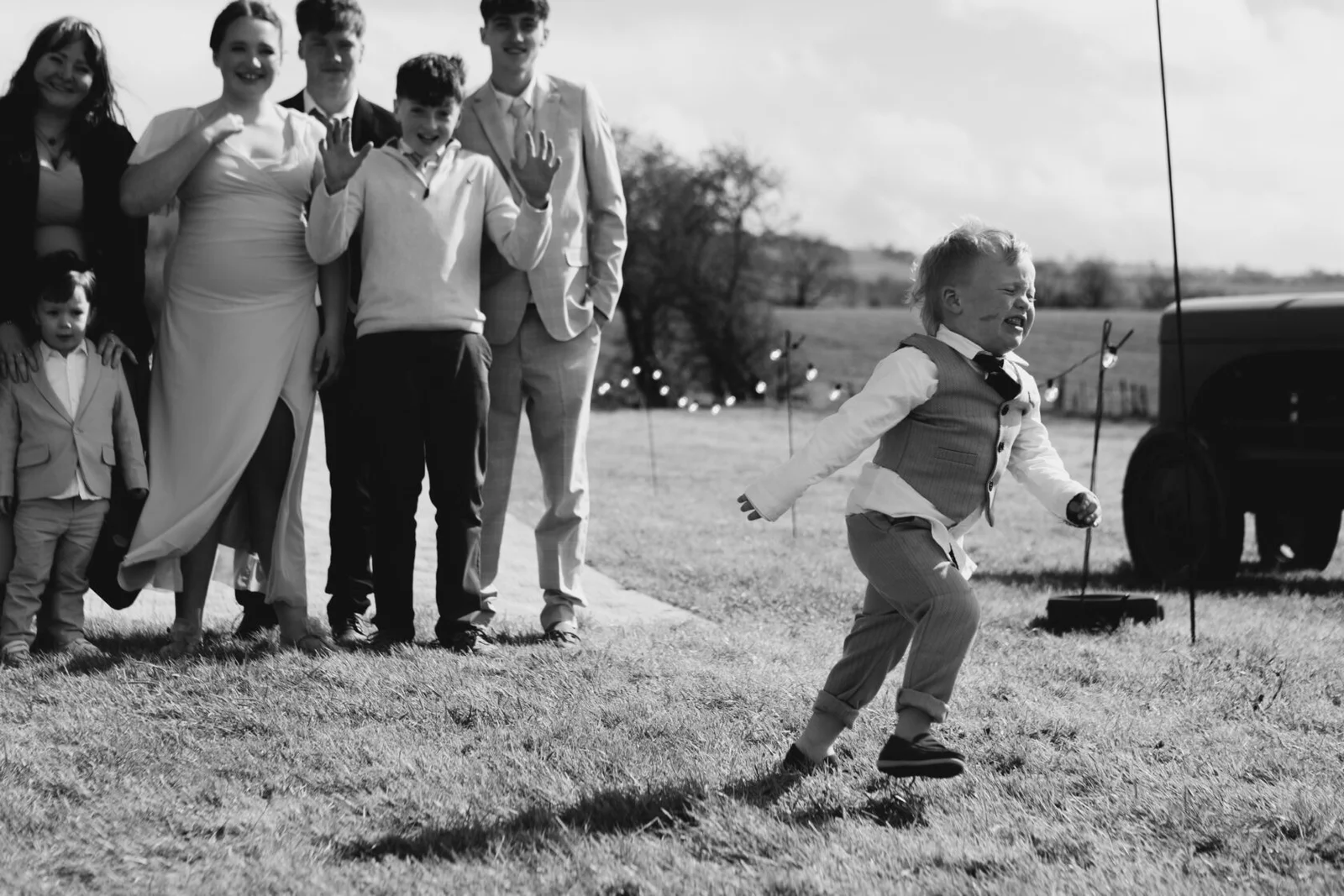
Which family groups should we choose?
Think about the relationships you most want to preserve. A simple list might include:
- the couple with everybody;
- the couple with one immediate family;
- the couple with the other immediate family;
- the couple with both immediate families;
- the couple with grandparents;
- the couple with siblings;
- the wedding party together;
- one chosen-family or close-friends group.
Use this list as a prompt and adapt it freely. “Immediate family” means different things in different homes. A step-parent, lifelong family friend, aunt who raised you or group of friends who became family may carry far more meaning than a conventional combination.
Some groups can include one partner with a parent, sibling or grandparent. These smaller portraits often become especially meaningful. Thinking through the relationships beforehand gives each one the attention it deserves.
Do we need a photograph with every guest?
At a very small wedding, one photograph including everybody may be straightforward. At a larger celebration, separate formal photographs with every couple, household or table can consume a surprising amount of time.
If seeing every guest in the gallery matters, tell your photographer. Documentary coverage of the drinks reception and meal may achieve that naturally. A photograph of the whole wedding can also be worthwhile when there is a suitable location and a safe way to arrange it. Planning it in advance means it can happen while guests are still together.
Should we give the photographer names or relationships?
Both are useful, but names help on the day. “Couple with Charlotte’s parents, Anna and David” is easier to organise than “bride’s family number three”. For a large group, list the actual people who belong in it.
Keep the final list in one place. Different versions held by the couple, photographer and venue coordinator create confusion. If somebody suggests another combination during the reception, it is easier to decide when the essential list is already clear.
Who should gather people?
Choose one confident helper from each side who knows the guests by sight. An usher, sibling or close friend often works well. The photographer cannot efficiently find an aunt they have never met while also arranging the group already in front of the camera.
The best helper is organised without making the atmosphere feel like school assembly. Give them the list before the wedding. They can quietly warn the next group while the current one is being photographed.
What about divorced parents or difficult family relationships?
Tell your photographer privately before the wedding. A brief, practical note is enough: who needs separate combinations, which arrangements would cause discomfort, and which words or assumptions should be avoided.
Group photographs should respect the relationships as they are. Separate combinations can be handled calmly and discreetly. Where everyone feels comfortable, blended-family photographs can be included too.
Recent bereavement may also shape the list. Sometimes a missing person makes a particular family photograph feel difficult; sometimes it makes that photograph even more important. Every couple responds differently, so the arrangements deserve care and privacy.
How should we plan for grandparents and mobility needs?
Photograph anyone who tires easily, uses mobility equipment or needs to sit near the beginning. Choose level ground, minimise walking and use chairs where needed. Comfort and dignity matter more than arranging everybody at identical heights.
Let the photographer know about hearing or sight needs as well. Clear communication and a little extra time are more useful than trying to hurry somebody because the schedule was too tight.
What if children or dogs are in the photographs?
Put their groups early while attention and patience are freshest. With children, a photograph that feels like the family matters more than identical expressions from every person. A little room to move often brings out their personality.
For dogs, choose a trusted person who can step out of the photographs to hold leads, carry water and take them away when they have had enough. Check the venue’s rules and choose a safe position away from traffic or livestock.
When should group photographs happen?
Soon after the ceremony or early in the drinks reception often works because guests remain nearby and easy to gather. It is also a good time to photograph older relatives while they feel comfortable and rested.
Leave space for congratulations and a drink before gathering everybody. Your wedding photography timeline should protect those spontaneous moments as deliberately as it protects the formal list.
Large groups are usually easiest first: everybody is gathered, then people can leave as the combinations become smaller. The exact order should also consider mobility, children and family sensitivities.
What happens if it rains?
Agree an indoor or covered option before the day. Look for enough room, a clear background, easy access and space for older relatives to remain comfortable. Doorways and busy walkways are best kept clear.
If a shower is brief, the list can sometimes move while the weather passes. If rain is settled, it is better to use a suitable indoor space than keep everybody waiting for a forecast to change. Window light, a clean background and enough room to stand comfortably matter more than pretending the weather is different.
Can we keep group photographs relaxed?
Yes. Preparation creates the calmest experience. When the essential list and helpers are agreed beforehand, the photographs need far less direction on the day.
Some photographs can be gently formal because seeing everybody clearly is the point. Others can loosen once a clear version has been made. People can talk, laugh, squeeze closer or respond to each other, allowing the relationship to remain visible in the finished photograph.
A final way to edit your list
Read each combination and ask three questions:
- Does this preserve a relationship that matters to us?
- Is it genuinely different from another group on the list?
- Would we choose this photograph over five more minutes with our guests?
If the answer is yes, keep it with confidence. Combinations included purely through convention can be removed.
Documentary photography and family groups belong comfortably together. Both can treat time and relationships with honesty. A thoughtful final list gives every photograph a clear reason to exist.